What you need to know about the new rules affecting General Interest Charges and
Shortfall Interest Charges
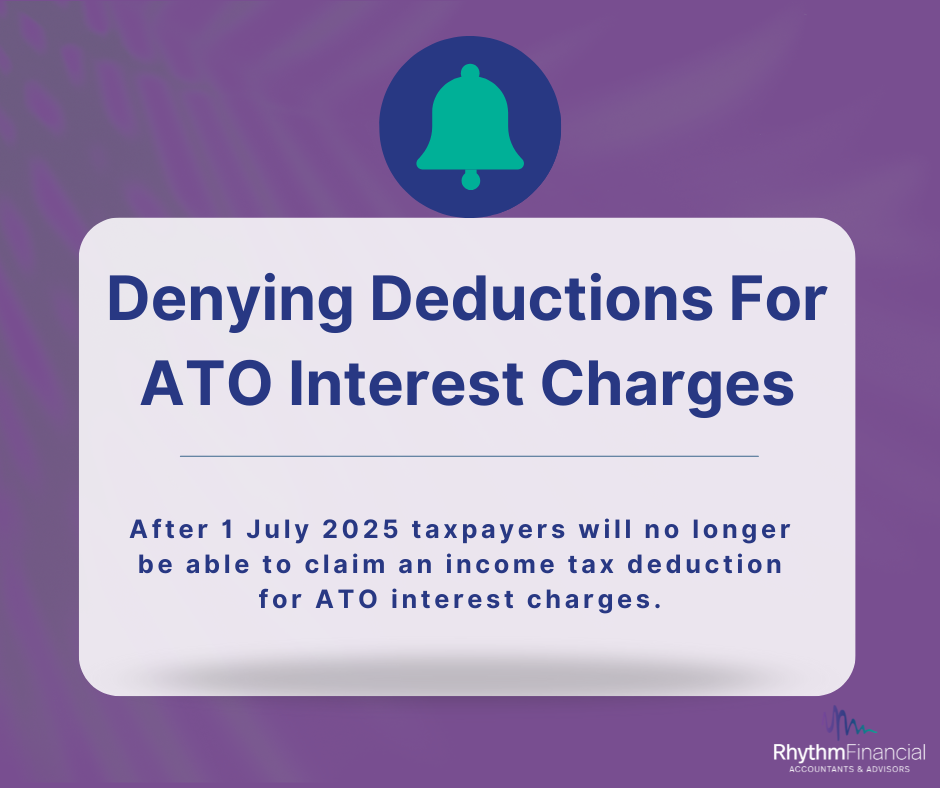
A significant change to Australian tax law is now in effect that will impact how businesses and individuals handle ATO interest charges. From 1 July 2025, taxpayers can no longer claim income tax deductions for General Interest Charges (GIC) and Shortfall Interest Charges (SIC) imposed by the Australian Taxation Office.
The Key Changes
This legislative amendment, which became law following the government’s announcement in the 2023-24 Mid-Year Economic and Fiscal Outlook, fundamentally alters the tax treatment of ATO interest charges. The change applies to all GIC and SIC incurred on or after 1 July 2025, regardless of which income year the underlying tax liability relates to.
Understanding When Interest Charges Are “Incurred”
The critical factor in determining deductibility is when the interest charge is incurred – that is, when you become liable for the charge, not when you actually pay it.
General Interest Charge (GIC) imposed on unpaid tax liabilities is incurred on a daily basis from the due date until payment is made.
Shortfall Interest Charge (SIC) imposed on unpaid income tax shortfalls is incurred in the year you receive a notice of amended assessment.
What This Means for Your Business
For Charges Incurred From 1 July 2025
- No deduction available for GIC or SIC
- Applies to interest on all tax liabilities, whether the original tax relates to pre or post-July 2025 income years
- If charges are later remitted by the ATO, you won’t need to include the remitted amount as assessable income
For Charges Incurred Before 1 July 2025
- Existing deduction rules continue to apply
- Charges remain deductible for 2024-25 and earlier income years
- If previously deducted charges are later remitted, the remitted amount must be included as assessable income in the year of remission
Key Actions
- Review current ATO liabilities
- Plan cashflow carefully – With no tax deduction available, the full cost of late payments now impacts your bottom line
- Prioritise tax compliance – The inability to deduct interest charges makes timely payment of tax obligations even more important
The Bigger Picture
This legislative change reflects the government’s policy position that interest charges imposed by the ATO are penalties for late payment rather than legitimate business expenses. By removing the deduction, the measure aims to strengthen incentives for taxpayers to meet their obligations on time.
The change also simplifies the tax treatment by eliminating the complex interaction between deductible interest charges and assessable income inclusions for subsequent remissions.
Need Assistance?
Our experienced tax team can help you understand how these changes affect your business and develop strategies to optimise your tax compliance processes.
Contact us today to discuss your specific situation and ensure you’re prepared for these important changes.